
The Great Migration
?Nature?s Greatest Show on Earth
The Great Wildebeest Migration is one of the most spectacular natural events on the planet. Every year, over 1.5 million wildebeest, joined by hundreds of thousands of zebras and gazelles, embark on a circular journey across Tanzania and Kenya in search of fresh grazing and water. Known as the world?s largest overland migration, this awe-inspiring movement of wildlife has been described as the “Greatest Show on Earth” ? and for good reason.
What is the Great Wildebeest Migration?
The Great Wildebeest Migration is a seasonal movement of wildlife across the Serengeti-Mara ecosystem. The cycle is dictated by rainfall and grass growth, as herds move in a clockwise direction between Serengeti National Park in Tanzania and the Maasai Mara National Reserve in Kenya.
This journey covers nearly 1,800 miles (2,900 km) each year and is fraught with challenges, including predator encounters, crocodile-infested rivers, and harsh weather conditions. Despite the dangers, the wildebeest instinctively continue their epic migration, ensuring the survival of the herd.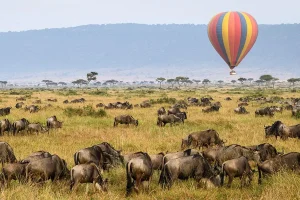
The Migration Cycle Month by Month
January ? March: Calving Season (Southern Serengeti, Tanzania)
The herds gather on the lush southern plains.
Around 500,000 calves are born within a few weeks in February.
Predators like lions, cheetahs, and hyenas thrive during this season.
April ? May: Movement Northwards
As grazing diminishes, the herds begin moving north.
Columns of wildebeest stretch across the Serengeti, an unforgettable sight.
June ? July: The Grumeti River Crossing
The herds encounter the first major obstacle: the Grumeti River.
Nile crocodiles lie in wait, making this crossing both dramatic and deadly.
July ? September: The Mara River Crossing
The most famous and thrilling stage of the migration.
Thousands of wildebeest plunge into the Mara River, facing strong currents and predators.
This spectacle is the highlight for many safari-goers.
October ? December: Return South
The herds move back through the Serengeti towards the southern plains.
By December, the cycle begins again as calving season approaches.
Why is the Migration Important?
Ecological balance: The migration sustains predators and fertilizes the grasslands.
Tourism: It attracts thousands of visitors annually, boosting the economies of Tanzania and Kenya.
Biodiversity: It ensures the survival of multiple species by supporting a complex food chain.
Best Time to Witness the Great Wildebeest Migration
The best time depends on which part of the migration you want to see:
January ? March: Calving season in Southern Serengeti.
June ? July: Grumeti River crossings.
July ? September: Mara River crossings in Northern Serengeti & Maasai Mara.
October ? December: Herds moving south through central Serengeti.
?? For river crossings, July to September is the most popular safari season.
Where to See the Migration
Tanzania: Serengeti National Park, Ngorongoro Conservation Area, Grumeti Game Reserve.
Kenya: Maasai Mara National Reserve.
Both destinations offer unique perspectives, and many safari travelers combine the two for the ultimate migration experience.
Tips for a Migration Safari
Book early ? Camps and lodges fill up quickly, especially near river crossings.
Choose mobile camps ? They move with the herds, giving you the best chance of sightings.
Hire expert guides ? Local guides know the herds? movements and maximize your chances.
Bring good gear ? Binoculars and cameras with zoom lenses are essential.
Final Thoughts
The Great Wildebeest Migration is more than just an animal movement ? it?s a story of survival, instinct, and the cycle of life. Whether you witness the dramatic river crossings, the birth of thousands of calves, or the endless columns of wildebeest sweeping across the plains, the experience is truly unforgettable.
If you are planning a safari, timing your trip around the migration will give you a front-row seat to one of nature?s most breathtaking spectacles.
Migration Safari Planning Links
The wildebeest migration is not one fixed event, so the best itinerary depends on the month you travel. Use this page to choose the right Serengeti region, then compare the route with practical budget and itinerary guides before booking.
- 7 day Tanzania safari itinerary for a first-time northern circuit route with Serengeti time.
- Tanzania safari cost for park fees, lodge levels, and sample budgets.
- Tanzania safari in March for green-season and calving-season planning.