

Tanzania birdwatching guide
Marabou Stork Bird Guide
The Giant Scavenger of Tanzania’s Savannas and Wetlands
Marabou Stork Bird Images

Quick Safari Highlights
Field Notes and Safari Context
The Giant Scavenger of Tanzania’s Savannas and Wetlands The marabou stork is one of the largest and most unusual birds in Africa. Despite its somewhat intimidating and “prehistoric” appearance, it plays an important ecological role as a scavenger, helping to clean up carcasses in savannah and wetland ecosystems. In Tanzania, it is commonly seen near water bodies, garbage sites, and wildlife areas where food is available. The species found in Tanzania is the Marabou stork, often called the “undertaker bird” because of its dark, hunched appearance. What Is the Marabou Stork? The marabou stork is a giant wading bird belonging to the stork family. Unlike many elegant storks, it has a more rugged and scavenger-like lifestyle.
It feeds on:
- Carrion (dead animals)
- Leftover kills from predators
- Waste and organic refuse
- Occasionally small animals
It is one of nature’s most efficient cleanup birds, working alongside vultures in ecosystems. In Tanzania, it is widespread in both wild and human-influenced environments.
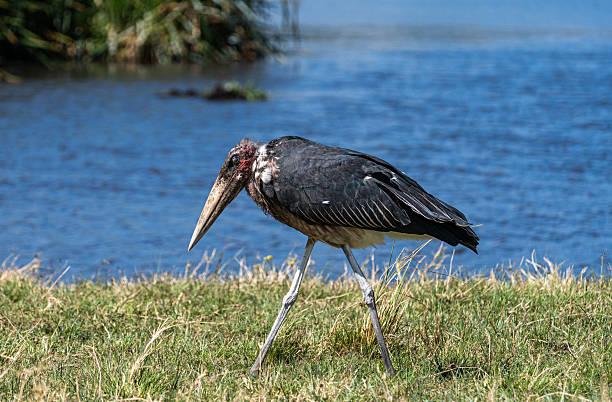
Appearance and Identification The marabou stork has a distinctive and somewhat eerie appearance.
Key features include:
- Massive wingspan (one of the largest of any bird)
- Bald pink head and neck
- Large dagger-like bill
- Black back and wings
- White belly and fluffy undertail “skirt”
- Air sac pouch hanging from the neck
When resting, it often appears hunched and still, contributing to its “undertaker” nickname. In flight, it is powerful and impressive, soaring with broad wings and minimal effort.
Habitat in Tanzania Marabou storks are highly adaptable and can be found in a wide range of habitats.
They are commonly seen in:
- Savannah grasslands
- Wetlands and lake edges
- River systems and floodplains
- Urban and peri-urban areas
- Landfills and garbage sites
In Tanzania, they are especially common in Serengeti, Lake Manyara, Arusha, and other areas where wildlife or human activity provides food.
Feeding Behavior The marabou stork is primarily a scavenger but can also be opportunistic.
Its diet includes:
- Animal carcasses (main food source)
- Leftovers from predators like lions and hyenas
- Fish and amphibians
- Insects and small animals
- Human food waste in urban areas
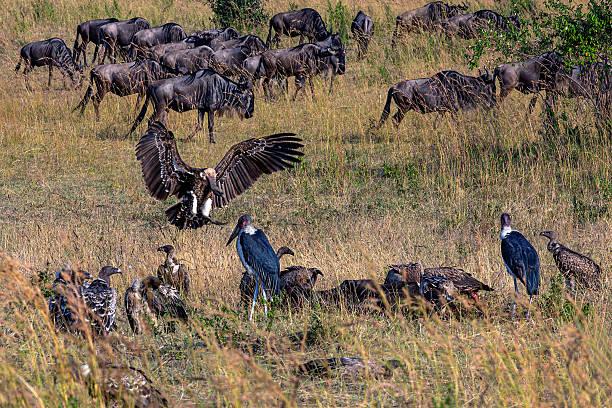
It often feeds alongside vultures and hyenas at carcasses, waiting for stronger scavengers to open tough hides before feeding.
Behavior in the Wild Marabou storks are often seen alone or in loose groups.
Their behavior includes:
- Soaring high on thermal currents
- Standing motionless near carcasses
- Roosting in large colonies in trees
- Walking slowly with deliberate movements
Despite their appearance, they are highly efficient and important scavengers in ecosystems. They are also known for their calm, patient behavior.
Breeding and Nesting Marabou storks breed in colonies, often alongside other large birds.
Breeding behavior includes:
- Building large stick nests in trees or cliffs
- Laying 1–3 eggs per clutch
- Both parents sharing incubation duties
- Chicks staying in nests for extended periods
Colonies can be noisy and active during breeding seasons.
Role in the Ecosystem The marabou stork plays a vital ecological role as a cleanup species.
It helps:
- Remove carcasses from the environment
- Prevent spread of disease
- Recycle nutrients back into ecosystems
Alongside vultures, it is an essential part of Africa’s scavenger community.
Adaptations for Survival
The marabou stork has several unique adaptations:
- Bald head for hygiene when feeding on carcasses
- Massive wings for efficient soaring flight
- Strong bill for tearing flesh
- Opportunistic diet for survival in varied environments
- Long legs for wading and walking through wetlands
These features make it one of the most adaptable large birds in Africa.
Best Places to See Marabou Stork in Tanzania Marabou storks are widespread and easy to spot.
Top locations include:
- Serengeti National Park – scavenging near predator kills
- Lake Manyara National Park – wetland edges
- Arusha and surrounding towns – urban scavengers
- Nyerere National Park – river systems
- Garbage sites and wetlands across northern Tanzania
Final Thoughts The marabou stork is one of Tanzania’s most distinctive and ecologically important birds. Though often misunderstood due to its appearance, it plays a crucial role in keeping ecosystems clean and balanced. Whether soaring above the savannah or standing silently near a carcass, it represents the essential and often overlooked role of scavengers in nature’s cycle of life.
How Marabou Stork Bird Fits Into a Tanzania Safari
Marabou Stork Bird matters because a great Tanzania safari is not only a list of sightings. It is a sequence of landscapes, seasons, guide decisions, comfort choices, and small field moments that shape how the journey feels. This Tanzania birdwatching guide keeps the supplied notes intact and expands them into practical planning advice for travelers comparing routes, timing, accommodation, photography, and guiding style.
Bird-focused travelers should use this guide to slow down the drive, listen more carefully, and connect habitat with behavior. Many of Tanzania’s most rewarding bird sightings happen while other guests are scanning for larger wildlife, so a guide who understands birds can make the whole safari feel richer.
Best Safari Conditions and Viewing Strategy
Field success depends on timing, patience, and interpretation. Early morning gives cooler light, more movement, and better photography. Late afternoon can be excellent for relaxed behavior and softer color. Midday still has value when guests understand shade, water, thermals, migration pressure, or the comfort rhythm of a longer safari day.
- Travel with a guide who can explain habitat, not only identify the subject.
- Keep binoculars or a camera ready before the vehicle stops.
- Watch behavior first, then confirm details such as shape, markings, tracks, calls, or movement.
- Give sightings time. The best moment often happens after the first quick look.
Planning With Tanview Safaris
Tanview Safaris can shape this topic into a route that matches the traveler’s interest. A wildlife-first guest may want slower game drives and more time in open habitats. A photography guest may prefer flexible mornings and better light. A family may need shorter drive sections, clear meal timing, and guides who explain the bush in a warm, patient way. A premium safari may combine stronger guiding with carefully chosen lodges or tented camps that make the day feel calm instead of rushed.
For a stronger plan, connect this guide with Safari Smart Tours, Tanzania Safari Guide, Birdwatching Guide, and Enquiry Now. Those internal resources help turn research into a route, budget, season choice, and booking conversation.
Responsible Safari Notes
Responsible travel protects the experience that visitors come to see. Keep a respectful distance, avoid pressuring guides to disturb wildlife, never feed animals, and treat sensitive habitats carefully. Ethical viewing also improves the quality of the sighting: relaxed wildlife behaves naturally, photographs look better, and the guide can explain the scene without rushing.
How to Combine This With a Wider Route
Most travelers get the best value when this topic is not treated as a stand-alone idea, but as part of a wider route. A northern Tanzania safari can combine Tarangire, Lake Manyara, Ngorongoro, Serengeti, Arusha, village experiences, waterfalls, cultural stops, and specialist wildlife interests in one smooth plan. The right order matters because it affects drive time, fatigue, photography light, and how naturally the trip builds from arrival to the final day.
When guests contact Tanview Safaris, the most useful details are travel month, number of days, comfort level, special interests, mobility needs, and whether the trip should feel adventurous, quiet, family-friendly, romantic, or photography-led. With those details, the team can recommend which experiences deserve a full day, which work best as a short stop, and which should be avoided in the wrong season.
This is also where honest planning helps most. Some experiences look simple on paper but depend on road condition, recent weather, local access, daylight, and how much energy guests have after previous safari days. A well-built itinerary leaves enough breathing room for the experience to feel memorable instead of squeezed between transfers.
Questions to Ask Before You Travel
- Which park, route, or lodge area gives the strongest chance for this interest?
- How much time should be allowed so the experience does not feel rushed?
- What season gives the best balance of weather, wildlife, cost, and comfort?
- Which guide skills, vehicle setup, and accommodation style will improve the day?
FAQ About Marabou Stork Bird
Is Marabou Stork Bird useful when planning a Tanzania safari?
Yes. This guide gives travelers a focused way to understand the topic before choosing dates, routes, guiding style, and the pace of the safari.
Can Tanview Safaris include this interest in a custom itinerary?
Yes. Guests can mention this interest during the enquiry stage so the team can suggest suitable parks, timing, lodges, and drive structure.
Does this guide include the supplied PDF information?
Yes. The article uses the supplied notes and images, then adds practical Tanzania safari context so the page is helpful for both readers and search engines.
What should I ask before booking?
Ask about the best season, realistic viewing chances, drive length, guide expertise, photography needs, accommodation style, and how this topic fits with the wider safari route.