

Tanzania birdwatching guide
Weaver bird Bird Guide
The Master Builders and Social Architects of Africa The Weaver Bird is one of the most intelligent and industrious birds in Africa. It is famous for its
Weaver bird Images From the PDF Source


Field Notes From the Source Guide
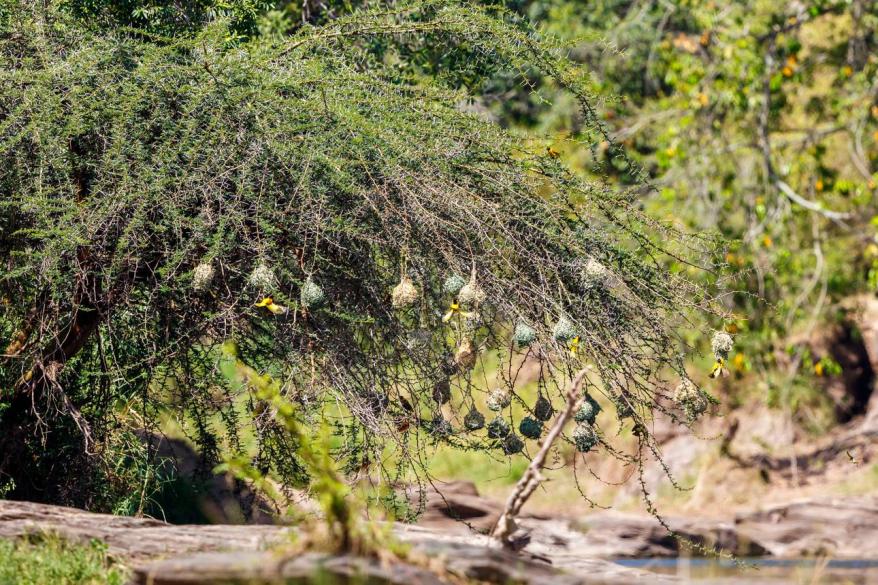
The Weaver Bird is one of the most intelligent and industrious birds in Africa. It is famous for its extraordinary nest-building skills, complex social behavior, and large, noisy colonies that bring life to savannahs, wetlands, and farmlands. Unlike many birds that build simple nests, weavers create carefully woven hanging structures that can take hours or days to complete. These nests are not just shelters—they are carefully designed constructions meant to attract mates, protect eggs, and survive harsh environmental conditions. Weaver birds are widely distributed across sub-Saharan Africa and are among the most commonly observed birds in both wild and human-modified landscapes.
A Wide Variety of Species with Shared Skills Weaver birds belong to a large family with many species, each adapted to different habitats. Some of the most common include: Village Weaver Red-billed Quelea Southern Masked Weaver Buffalo Weaver Red-headed Weaver Despite their differences in color and size, all weaver birds share a common trait: their ability to weave intricate nests using natural plant materials. Most species are small to medium-sized, with strong, short, cone-shaped bills designed for handling seeds and weaving grass strips. Males are usually more brightly colored during breeding seasons, while females tend to have duller plumage for camouflage.
The Art of Nest Construction The most impressive feature of weaver birds is their nest-building behavior. Only males build nests, and they construct them to attract females. The process is highly detailed and systematic: 1. The male selects a suitable branch, often over water or in thorny trees for protection. 2. He collects long strips of grass or plant fibers. 3. He begins weaving by looping and tying grass strands into knots. 4. He creates a spherical or oval-shaped nest with a downward-facing entrance. 5. Once completed, he advertises the nest by flapping wings and calling to attract females. Females carefully inspect multiple nests before choosing a mate. If a nest is not strong or well- built, it is rejected. In many cases, a male may build several nests in a single breeding season, constantly improving his construction skills.
Social Life and Colony Behavior Weaver birds are highly social and often live in large colonies that can include dozens to thousands of individuals. These colonies provide several advantages: Protection from predators due to numbers Increased awareness of danger through group communication Better breeding opportunities However, life in a colony is also competitive. Males often fight over nesting sites, and noise levels are constantly high due to calling, wing flapping, and territorial displays. Colonies are especially active during breeding seasons when nest-building is at its peak.
Feeding Habits and Diet Weaver birds are omnivorous, meaning they eat both plant and animal matter. Their diet mainly includes: Grass seeds Grains and cultivated crops Insects such as termites and beetles Small fruits In agricultural areas, some species are considered pests because they feed on crops like rice and millet in large flocks. However, they also help control insect populations, making them ecologically important. They usually forage in groups, moving through grasslands or fields in search of food.
Habitat and Distribution Weaver birds are extremely adaptable and can be found in a wide range of habitats across Africa, including: Savannahs Wetlands Riverbanks Agricultural fields Urban and rural gardens They are especially common in regions with grasses and trees suitable for nesting. They are widely distributed across: Tanzania Kenya Uganda Zambia South Africa Their ability to live near humans makes them one of the most familiar bird groups in Africa.
Breeding and Reproduction Weaver birds have a very competitive and visually driven breeding system. Males build nests to attract females, and success depends on nest quality. Once a female selects a nest: She lays 2–4 eggs She incubates them while the male may continue building or displaying Both parents may help feed chicks in some species In some colonies, males may mate with multiple females if they build enough attractive nests.
Ecological Importance Weaver birds play an important role in ecosystems: They help control insect populations They spread plant seeds They serve as food for predators like hawks and snakes They indicate healthy grassland and wetland ecosystems Their large colonies also create micro-ecosystems that support other small birds and insects.
Conservation Status Most weaver bird species are currently classified as Least Concern, and many populations are stable or even increasing due to their adaptability. However, they can be affected by: Habitat loss Pesticide use Crop control measures in farming areas Climate changes affecting food availability Despite this, they remain one of the most successful bird groups in Africa.
Final Thoughts Weaver birds are true engineers of the natural world. Their woven nests, social colonies, and adaptable lifestyle make them one of the most remarkable bird families in Africa. They represent intelligence, creativity, and cooperation — turning simple grass into complex structures that support entire generations of life.
Weaver bird in Tanzania Safari Planning
For travelers planning a Tanzania safari, the Weaver bird is more than a name on a bird list. It is part of the daily rhythm of the bush: calls at dawn, movement around water, quick flashes of color, or patient shapes circling above the plains. Birdwatching adds depth to a safari because it keeps the landscape alive between larger wildlife sightings and helps guests understand habitat, season, food chains, and conservation in a more intimate way.
The Master Builders and Social Architects of Africa The Weaver Bird is one of the most intelligent and industrious birds in Africa. It is famous for its. This guide is built from the supplied PDF field notes and expanded with practical safari context for readers who want to identify, photograph, and appreciate the species while traveling with Tanview Safaris. The goal is to keep the original facts intact while making the page useful for search, itinerary planning, and real field observation.
Best Places to Watch for This grassland seed-eater on Safari
The best viewing areas depend on habitat. Woodland and river birds are often found near acacia stands, riverine forest, marsh edges, lodge gardens, and shaded drainage lines. Open-country species are easier to notice on grasslands, road edges, plains, and dry savannah where perches, thermals, or nesting colonies are visible. On a northern Tanzania itinerary, guests should keep watching during drives through Tarangire, Lake Manyara, Ngorongoro highlands, Serengeti plains, and the mixed farmland around Arusha because birds often appear in transitional habitats rather than only inside famous wildlife hotspots.
A guide who knows both mammals and birds can turn short roadside moments into meaningful sightings. Many species are easiest to identify by behavior: hovering, swooping from a perch, walking on the ground, gathering in noisy colonies, building nests, following thermals, or making repeated calls. Travelers should keep binoculars close even when the vehicle is moving slowly because some of the best sightings happen in seconds.
How to Identify Weaver bird in the Field
Identification should start with shape and behavior before color. Notice the bill size, tail length, wing shape, posture, flight pattern, and preferred perch. Then check color blocks, facial markings, underparts, and any unusual voice or movement. This approach works well in Tanzania because light can be harsh, birds may be partly hidden, and similar species can share the same habitat.
- Look at the bill first: thick, hooked, dagger-like, curved, or fine and nectar-adapted.
- Watch the tail: long display tails, short square tails, forked tails, or heavy tails can quickly narrow the group.
- Study the habitat: riverbank, woodland, open savannah, village edge, palm area, wetland, forest, or cliff country.
- Listen for voice: repeated calls, ringing notes, chatter, harsh croaks, or melodic song often confirm the sighting.
- Observe feeding: aerial insect hunting, scavenging, fishing, nectar feeding, seed eating, or ground foraging.
Photography Tips for Birdwatchers
Bird photography in Tanzania rewards patience. Use early morning light whenever possible, keep the vehicle still, and avoid chasing the bird. A clean background, a natural perch, and a moment of behavior often create a stronger safari photograph than a tight crop. For small birds, take several frames because head angle and eye catchlight change quickly. For larger birds, include habitat when it tells the story of the species.
Travelers using phones can still make useful records by photographing the bird, the surrounding habitat, and any nearby landmark. These reference photos help guides confirm identification later. With larger cameras, a fast shutter speed is helpful for flight, while a quieter approach works better for perched birds and nesting areas.
Conservation and Responsible Viewing
Responsible birdwatching protects both the bird and the safari experience. Keep distance from nests, avoid loud call playback, and never pressure a guide to drive off-road toward a sensitive bird. Many African birds depend on old trees, grassland structure, wetlands, healthy insect populations, and clean scavenging systems. Protecting these habitats also protects the broader safari landscape.
Vultures, raptors, wetland birds, seed eaters, and insect specialists each tell a different conservation story. Some species are still common, while others face pressure from poisoning, habitat loss, pesticides, collision risk, or disturbance. A good safari article should therefore do more than help readers identify a bird; it should explain why the bird matters.
Planning a Birdwatching Safari With Tanview Safaris
Guests who care about birds should mention that interest before the itinerary is finalized. Tanview Safaris can then pace game drives more carefully, include productive wetland or woodland stops, and match the route to the season. A bird-focused traveler may prefer slower drives, longer mornings, lodge gardens with natural habitat, and guides who are comfortable pausing for smaller sightings.
Use this article together with Tanview birdwatching guides, Safari Smart Tours, and Enquiry Now when building a route that balances birds, mammals, landscapes, photography, and comfort.
FAQ About Weaver bird
Is Weaver bird easy to see on safari?
It depends on season, habitat, and local movement, but careful guiding improves the chance of a good sighting. Many birds are easiest in the morning when they are active, vocal, and visible before heat shimmer increases.
Should I bring binoculars for this bird?
Yes. Binoculars make birding much more rewarding, especially for small, distant, or fast-moving species. Even a compact pair helps guests see plumage, bill shape, and behavior clearly.
Can this sighting be included in a normal wildlife safari?
Yes. Birdwatching fits naturally into a Tanzania safari. The best approach is to tell your guide early so they can include bird-rich stops without reducing the main wildlife experience.
What source files were used for this guide?
This post uses the supplied PDF source file: Weaver bird.pdf. The article keeps the PDF observations and images while adding deeper field context for SEO and traveler planning.