

Tanzania birdwatching guide
Pied kingfisher Bird Guide
The Hovering Fisher of Africa’s Waters The Pied Kingfisher is one of the most remarkable and easily recognized kingfishers in Africa. It
Pied kingfisher Images From the PDF Source


Field Notes From the Source Guide
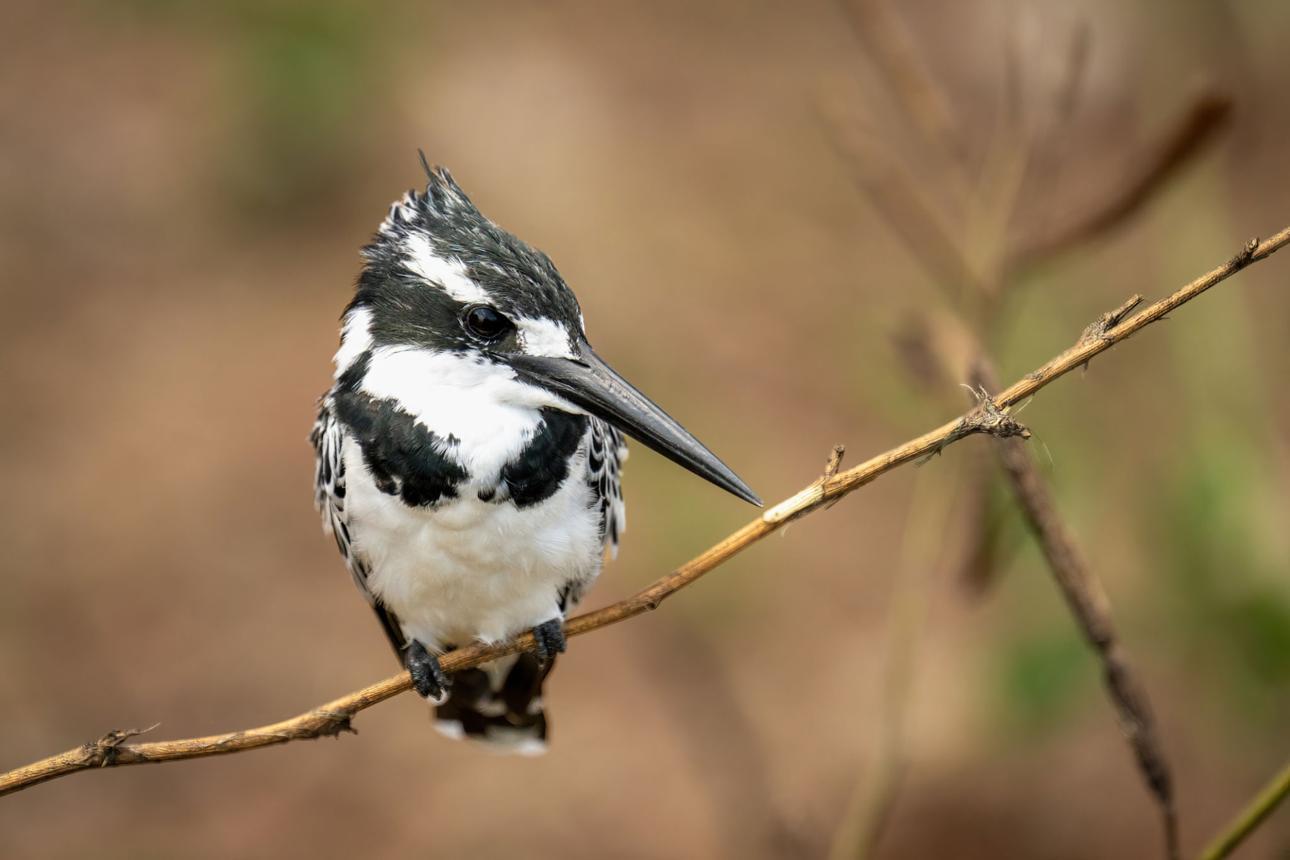
The Pied Kingfisher is one of the most remarkable and easily recognized kingfishers in Africa. It is famous for its black-and-white plumage, sharp calls, and most impressively, its ability to hover in mid-air while hunting. Unlike many other kingfishers that rely only on perches, this species can “hang” above water like a helicopter before diving for fish. It is commonly seen near rivers, lakes, dams, and coastal waters, where it patrols the surface looking for small fish.
A Bold Black-and-White Appearance The Pied Kingfisher has a striking monochrome pattern that makes it stand out against water and sky. Its body is mostly white with bold black markings on the head, wings, and chest. This contrast helps it remain visible even while flying at high speed. It has a strong, straight black bill designed for catching fish. Its wings are long and pointed, giving it excellent control during hovering flight. The tail is also well-adapted for balance in mid-air. Males often have a double black band across the chest, while females usually have a single band, making them easy to tell apart.
Master of Hovering Flight The Pied Kingfisher is best known for its ability to hover in place while searching for prey. It beats its wings rapidly, staying suspended above the water as it scans for movement below. Once it spots a fish, it dives straight down with great accuracy. This hovering technique allows it to hunt in open water where there are no perches available. After catching its prey, it returns to a nearby perch and swallows the fish head-first. This unique hunting style makes it one of the most specialized and efficient fishing birds in Africa.
Habitat and Distribution Pied Kingfishers are strongly associated with freshwater and coastal environments. They are commonly found in: Rivers and streams Lakes and reservoirs Wetlands and marshes Coastal lagoons Floodplains They prefer open water where they can easily hover and spot fish. They are widely distributed across Africa, including: Tanzania Kenya Uganda Zambia South Africa
Social Behavior and Lifestyle Pied Kingfishers are often seen in pairs or small family groups. They are highly vocal birds, producing sharp, chattering calls that can be heard along rivers. They are territorial and will defend feeding areas from other kingfishers. However, they may gather in small groups where food is abundant. They are active during the day and spend much of their time hunting or perched near water.
Nesting and Reproduction Pied Kingfishers nest in burrows dug into sandy riverbanks or soft soil. Both male and female work together to excavate the nesting tunnel. Inside the burrow, the female lays several eggs, and both parents share incubation duties. After hatching, chicks are fed small fish brought by both adults. The underground nest protects the young from predators and harsh weather conditions.
Ecological Importance The Pied Kingfisher plays an important role in controlling fish populations in freshwater ecosystems. By feeding on small fish and aquatic organisms, it helps maintain ecological balance. It is also an indicator of healthy water systems, as it depends on clear, fish-rich environments for survival.
Conservation Status The Pied Kingfisher is currently classified as Least Concern, with stable populations across most of its range. However, it can be affected by: Water pollution Habitat destruction along rivers and lakes Decline in fish populations Disturbance of nesting banks Protecting wetlands and freshwater habitats ensures its continued survival.
Final Thoughts The Pied Kingfisher is one of Africa’s most fascinating birds, admired for its unique hovering ability and striking black-and-white beauty. Its skillful hunting and strong connection to water make it a key part of freshwater ecosystems. It represents precision, adaptability, and mastery of flight — a true expert of the skies above Africa’s rivers and lakes.
Pied kingfisher in Tanzania Safari Planning
For travelers planning a Tanzania safari, the Pied kingfisher is more than a name on a bird list. It is part of the daily rhythm of the bush: calls at dawn, movement around water, quick flashes of color, or patient shapes circling above the plains. Birdwatching adds depth to a safari because it keeps the landscape alive between larger wildlife sightings and helps guests understand habitat, season, food chains, and conservation in a more intimate way.
The Hovering Fisher of Africa’s Waters The Pied Kingfisher is one of the most remarkable and easily recognized kingfishers in Africa. It. This guide is built from the supplied PDF field notes and expanded with practical safari context for readers who want to identify, photograph, and appreciate the species while traveling with Tanview Safaris. The goal is to keep the original facts intact while making the page useful for search, itinerary planning, and real field observation.
Best Places to Watch for This kingfisher on Safari
The best viewing areas depend on habitat. Woodland and river birds are often found near acacia stands, riverine forest, marsh edges, lodge gardens, and shaded drainage lines. Open-country species are easier to notice on grasslands, road edges, plains, and dry savannah where perches, thermals, or nesting colonies are visible. On a northern Tanzania itinerary, guests should keep watching during drives through Tarangire, Lake Manyara, Ngorongoro highlands, Serengeti plains, and the mixed farmland around Arusha because birds often appear in transitional habitats rather than only inside famous wildlife hotspots.
A guide who knows both mammals and birds can turn short roadside moments into meaningful sightings. Many species are easiest to identify by behavior: hovering, swooping from a perch, walking on the ground, gathering in noisy colonies, building nests, following thermals, or making repeated calls. Travelers should keep binoculars close even when the vehicle is moving slowly because some of the best sightings happen in seconds.
How to Identify Pied kingfisher in the Field
Identification should start with shape and behavior before color. Notice the bill size, tail length, wing shape, posture, flight pattern, and preferred perch. Then check color blocks, facial markings, underparts, and any unusual voice or movement. This approach works well in Tanzania because light can be harsh, birds may be partly hidden, and similar species can share the same habitat.
- Look at the bill first: thick, hooked, dagger-like, curved, or fine and nectar-adapted.
- Watch the tail: long display tails, short square tails, forked tails, or heavy tails can quickly narrow the group.
- Study the habitat: riverbank, woodland, open savannah, village edge, palm area, wetland, forest, or cliff country.
- Listen for voice: repeated calls, ringing notes, chatter, harsh croaks, or melodic song often confirm the sighting.
- Observe feeding: aerial insect hunting, scavenging, fishing, nectar feeding, seed eating, or ground foraging.
Photography Tips for Birdwatchers
Bird photography in Tanzania rewards patience. Use early morning light whenever possible, keep the vehicle still, and avoid chasing the bird. A clean background, a natural perch, and a moment of behavior often create a stronger safari photograph than a tight crop. For small birds, take several frames because head angle and eye catchlight change quickly. For larger birds, include habitat when it tells the story of the species.
Travelers using phones can still make useful records by photographing the bird, the surrounding habitat, and any nearby landmark. These reference photos help guides confirm identification later. With larger cameras, a fast shutter speed is helpful for flight, while a quieter approach works better for perched birds and nesting areas.
Conservation and Responsible Viewing
Responsible birdwatching protects both the bird and the safari experience. Keep distance from nests, avoid loud call playback, and never pressure a guide to drive off-road toward a sensitive bird. Many African birds depend on old trees, grassland structure, wetlands, healthy insect populations, and clean scavenging systems. Protecting these habitats also protects the broader safari landscape.
Vultures, raptors, wetland birds, seed eaters, and insect specialists each tell a different conservation story. Some species are still common, while others face pressure from poisoning, habitat loss, pesticides, collision risk, or disturbance. A good safari article should therefore do more than help readers identify a bird; it should explain why the bird matters.
Planning a Birdwatching Safari With Tanview Safaris
Guests who care about birds should mention that interest before the itinerary is finalized. Tanview Safaris can then pace game drives more carefully, include productive wetland or woodland stops, and match the route to the season. A bird-focused traveler may prefer slower drives, longer mornings, lodge gardens with natural habitat, and guides who are comfortable pausing for smaller sightings.
Use this article together with Tanview birdwatching guides, Safari Smart Tours, and Enquiry Now when building a route that balances birds, mammals, landscapes, photography, and comfort.
FAQ About Pied kingfisher
Is Pied kingfisher easy to see on safari?
It depends on season, habitat, and local movement, but careful guiding improves the chance of a good sighting. Many birds are easiest in the morning when they are active, vocal, and visible before heat shimmer increases.
Should I bring binoculars for this bird?
Yes. Binoculars make birding much more rewarding, especially for small, distant, or fast-moving species. Even a compact pair helps guests see plumage, bill shape, and behavior clearly.
Can this sighting be included in a normal wildlife safari?
Yes. Birdwatching fits naturally into a Tanzania safari. The best approach is to tell your guide early so they can include bird-rich stops without reducing the main wildlife experience.
What source files were used for this guide?
This post uses the supplied PDF source file: Pied kingfisher.pdf. The article keeps the PDF observations and images while adding deeper field context for SEO and traveler planning.